

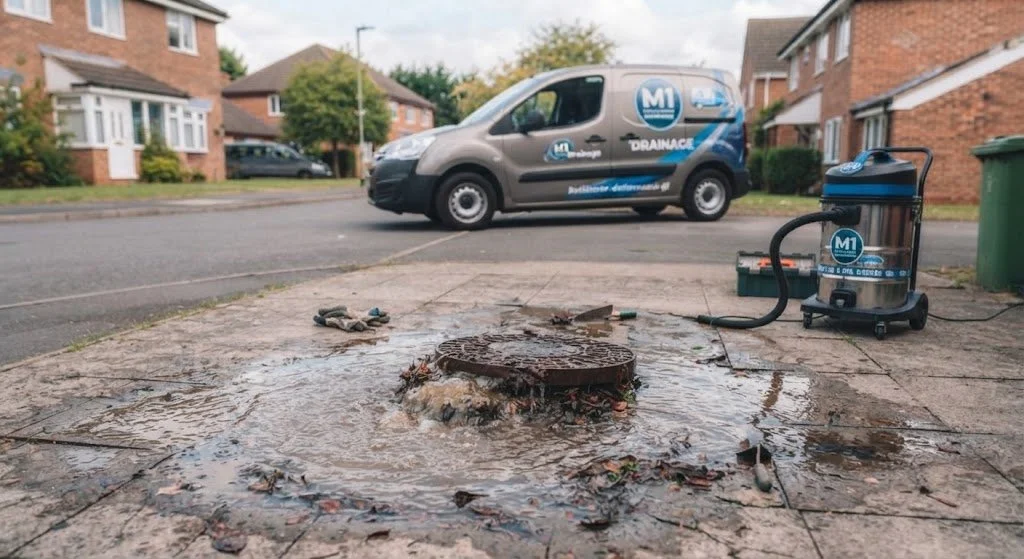
Drain Blockage Milton Keynes
The Complete Guide to Drain Blockages Across Milton Keynes
Blocked drains in Milton Keynes? M1 Drainage Service explains the causes, warning signs, solutions and how to prevent recurring drainage problems.
A blocked drain can quickly become a major inconvenience. Whether your kitchen sink is draining slowly, your toilet is backing up, water is overflowing from an outside drain or several drains in your property have stopped working, identifying the cause is the first step towards resolving the problem.
M1 Drainage Service provides drainage assistance across Milton Keynes and surrounding areas. This comprehensive guide explains how to recognise a blockage, what you can safely do yourself, when to call a drainage professional and how to reduce the risk of future problems.
Need help with a blocked drain in Milton Keynes?
Call: 07754 856275
WhatsApp: Message M1 Drainage Service
Email: [email protected]
Website: M1 Drainage Service
1. What causes drain blockages in Milton Keynes?
Drain blockages develop for several reasons. Some happen gradually as grease and debris accumulate inside pipes, while others occur suddenly when an unsuitable item enters the drainage system or a pipe becomes obstructed.
Understanding the possible cause can help you decide what to do next.
Fat, oil and grease
Cooking oil, fat and grease can cool inside drainage pipes and stick to their internal surfaces. Over time, this material can trap food particles, soap and other debris until the pipe becomes restricted.
Prevention tip: Allow cooking fat to cool and dispose of it in the bin rather than pouring it down the sink. Wipe greasy pans before washing them.
Wet wipes and sanitary products
Wet wipes, cotton buds, sanitary products and similar items can become caught inside pipes or combine with other waste to form a blockage.
Even products marketed as flushable can cause problems in drainage systems.
Prevention tip: Only flush toilet paper and human waste. Put wipes, nappies, sanitary products and other rubbish in an appropriate bin.
Hair and soap deposits
Hair can collect around sink, shower and bath outlets. Soap residue and other deposits may gradually build up around the hair, restricting the flow of water.
Prevention tip: Fit a suitable drain cover or hair catcher and clean it regularly.
Tree roots entering drainage pipes
Tree roots can enter drains through existing cracks, defective joints or other weaknesses. As roots grow, they can restrict the pipe and trap debris.
Root ingress can cause repeated blockages, particularly when the underlying pipe defect remains unrepaired.
Possible solution: A drainage engineer may use CCTV drain inspection equipment to identify the affected section and recommend an appropriate method of clearance or repair.
Silt, leaves and outdoor debris
Outside gullies and surface-water drains can become obstructed by leaves, soil, moss, litter and other debris. This can cause rainwater to collect around the property or overflow from a gully.
Prevention tip: Keep accessible drain covers and gullies clear of loose leaves and debris. Do not remove heavy covers or enter drainage chambers yourself.
Damaged, displaced or collapsed pipes
A pipe may become damaged through ground movement, deterioration, defective joints or other structural problems. In some cases, the blockage is a symptom of a more serious defect.
If the same drain keeps blocking after it has been cleared, a CCTV drain survey may help establish whether there is a structural problem.
2. Common signs of a blocked drain
Recognising the early warning signs can help prevent a minor restriction from developing into a more serious problem.
Look out for:
Water draining slowly from sinks, baths or showers.
Toilets that flush poorly or rise unusually high.
Water backing up through a plughole or shower drain.
Gurgling noises from pipes or nearby drains.
Unpleasant smells coming from sinks, gullies or drain covers.
Outside drains filling with water when they should be draining away.
Water overflowing from an external gully.
Several plumbing fixtures becoming slow at the same time.
Repeated blockages in the same location.
One slow sink may indicate a local blockage. If several fixtures are affected, the restriction could be further along a shared drainage pipe.
Important: If sewage is backing up into your property, stop using affected fixtures and seek professional assistance promptly.
3. What type of drain is blocked?
The location of the problem can provide useful clues about its cause.
Blocked kitchen sink
Common causes include grease, food residue, soap deposits and debris around the waste trap.
You may notice standing water, slow drainage or an unpleasant smell from the sink.
Read our drain jetting service information to learn about one of the professional methods used to clear suitable drainage blockages.
Blocked toilet
Toilet blockages can result from excessive toilet paper, wipes, sanitary products or other objects entering the toilet.
If the water level rises after flushing, do not keep flushing in an attempt to force the blockage through. This could cause an overflow.
Blocked bath or shower
Hair, soap deposits and other bathroom debris are common causes of slow drainage from baths and showers.
Where the blockage is close to the outlet, cleaning an accessible plughole or waste trap may help. If several bathroom fixtures are affected, the problem may be further along the drainage system.
Blocked outside drain
An outside drain or gully may become blocked with leaves, silt, grease or other material. You might notice standing water, foul smells or water spilling out during use.
If the drain is full of wastewater, avoid contact with it and do not attempt to dismantle the drainage system.
Blocked downpipe or rainwater drain
A blocked rainwater downpipe can cause guttering to overflow or rainwater to collect around a building. If the downpipe connects to a gully or underground rainwater drain, the obstruction may be further along the system.
For guttering-related problems, visit our guttering services page.
4. How to tell whether the blockage is inside your property or in an outside drain
Working out where the restriction is located can help you explain the problem when contacting a drainage engineer.
A blockage may be local if:
Only one sink, toilet, bath or shower is affected.
Other nearby fixtures are draining normally.
The problem began after a particular item or material entered the waste.
A shared or external blockage may be more likely if:
Several toilets, sinks or other fixtures are affected.
Water backs up in one fixture when another is used.
An outside drain or inspection chamber is visibly full.
You have recurring drainage problems despite previous clearance.
These are clues rather than a definitive diagnosis. The layout of your property's plumbing and drainage system will affect where the blockage is located.
Do not remove heavy drain covers or enter an inspection chamber to investigate. If you can see wastewater backing up from a safe distance, explain this to the drainage professional.
5. What can you safely do yourself before calling a drainage company?
Some minor blockages can be resolved with basic maintenance, provided there is no risk of overflow, chemical exposure or contact with sewage.
Step 1: Stop adding water
If a sink, toilet or outside drain is filling up, stop using the affected fixture. Continuing to run taps or flush a toilet may make the problem worse.
Step 2: Check for an obvious, accessible obstruction
For a sink, bath or shower, inspect the plughole for visible hair or debris that can be removed safely without dismantling pipework.
Wear suitable gloves and wash your hands thoroughly afterwards.
Step 3: Try a suitable plunger where appropriate
A correctly sized plunger may help with some minor sink or toilet blockages. Follow the product instructions and avoid plunging if corrosive drain chemicals have already been used, as liquid may splash back.
Step 4: Avoid mixing drain chemicals
Never mix different drain-cleaning products, bleach, acids or other chemicals. Dangerous fumes or chemical reactions can occur.
If you have already used a chemical cleaner, tell the drainage engineer before they begin work.
Step 5: Know when to stop
If the blockage does not clear easily, water continues to rise, sewage is backing up or several drains are affected, stop attempting DIY clearance and contact a professional.
Avoid using improvised metal rods or forcing objects deep into a pipe. This can damage pipework or push the obstruction further into the system.
6. Professional drain unblocking methods
The appropriate method depends on the type of blockage, pipe condition, access and location. A professional drainage engineer should assess these factors before selecting a suitable approach.
Mechanical drain clearance
Suitable professional equipment may be used to break up or remove an obstruction from a pipe.
Mechanical methods can be effective for certain deposits, accumulated debris and other localised blockages. The method must be chosen to suit the pipe material and condition.
High-pressure water jetting
Drain jetting uses specialised equipment to deliver water at controlled high pressure to help clear suitable obstructions and remove deposits from the pipe walls.
It may be appropriate for grease, silt and other accumulated material, depending on the drainage system and its condition.
Jetting is not suitable for every situation. A damaged or structurally compromised pipe may need inspection and a different approach.
Learn more on our M1 Drainage Service drain jetting page.
CCTV drain surveys
A CCTV drain survey uses a specialist camera to inspect the inside of accessible pipework.
It may be recommended when:
A drain keeps blocking after clearance.
Tree roots are suspected.
There may be a cracked or displaced pipe.
The cause of a blockage is unclear.
You need more information about the condition of the drainage system.
A camera inspection can help identify visible defects and guide the next steps. The extent of the inspection and the findings should be confirmed with the engineer.
Root removal and pipe repairs
If roots have entered a drain, suitable equipment may be used to remove them, depending on the pipe's condition.
However, removing roots does not necessarily repair the point where they entered. Where a defect is found, further repair may be needed to reduce the risk of the problem returning.
7. Why do some drains keep blocking?
A drain that blocks repeatedly may have an underlying problem rather than simply a build-up of waste.
Possible causes include:
Tree roots growing through a defective joint.
Grease or silt remaining after an incomplete clearance.
A damaged, displaced or deformed pipe.
Poor drainage alignment or a section where debris collects.
Inappropriate items repeatedly entering the drainage system.
A blockage further downstream that has not been identified.
If the same drain blocks again soon after it has been cleared, it is worth investigating why.
Repeatedly clearing a drain without identifying the cause may lead to additional inconvenience and expense. A suitable CCTV survey can help determine whether further investigation or repairs are necessary.
8. What should you do if sewage is backing up?
A sewage backup requires prompt attention because wastewater can contain harmful microorganisms and contaminate floors, belongings and other surfaces.
If sewage is coming back into your property:
Stop using toilets, sinks, baths and other fixtures connected to the affected drainage system.
Keep children and pets away from the contaminated area.
Avoid touching sewage or attempting to clean up significant contamination without appropriate protection.
Do not remove drain covers or enter inspection chambers.
Contact a drainage professional to discuss the problem and arrange appropriate assistance.
If sewage has contaminated living areas, follow appropriate public-health and cleaning advice before using the affected space again.
If water is close to electrical equipment, avoid entering the area and seek appropriate emergency assistance where necessary.
If you are unsure whether the affected pipework is your responsibility or belongs to a water company, landlord or managing agent, seek clarification while arranging the immediate response.
9. Who is responsible for a blocked drain?
Responsibility can depend on where the blockage is located, who owns the pipe and the property's arrangements.
As a general guide:
Private internal plumbing: Blockages in a sink trap or internal waste pipe may be the responsibility of the property owner or occupier, depending on the circumstances.
Private drains: The owner may be responsible for certain drains serving their property.
Shared drains or public sewers: Responsibility may lie with the relevant water and sewerage company, depending on the pipe and local arrangements.
Rented properties: Tenants should inform their landlord or managing agent promptly, particularly if the problem may involve a repair obligation.
Commercial premises: The lease, ownership arrangements and drainage layout may affect who is responsible.
Do not assume that every outside drain belongs to the water company or that every blockage is a private responsibility. If the location is unclear, contact the relevant water company, landlord or property manager for guidance.
10. How much does drain unblocking cost in Milton Keynes?
The cost of drain clearance varies depending on the nature of the problem and the work required. There is no single price that applies to every blocked drain.
Factors that may affect the price include:
Whether the blockage is inside or outside the property.
The location and accessibility of the affected pipe.
The type and severity of the obstruction.
The equipment and clearance method required.
Whether a CCTV drain survey is needed.
Whether further work or a pipe repair is necessary.
The time of attendance and any applicable out-of-hours charges.
Before agreeing to work, ask what the quoted price includes, whether any additional charges may apply and whether further investigation would cost extra.
For a clearer assessment, explain where the blockage is, which fixtures are affected and whether the problem has happened before.
Contact M1 Drainage Service on 07754 856275 to discuss your drainage problem and the next steps.
11. How to prevent future drain blockages
Simple habits can reduce the likelihood of many common blockages.
In the kitchen
Put cooking fat and oil in an appropriate container for disposal.
Wipe greasy pans before washing them.
Scrape food waste into the bin rather than the sink.
Use a suitable sink strainer to catch food debris.
In the bathroom
Fit a hair catcher to showers and baths.
Remove visible hair and soap deposits from accessible outlets.
Do not flush wipes, cotton buds, sanitary products or other rubbish.
Use only an appropriate amount of toilet paper.
Outside the property
Keep accessible gullies free of leaves and loose debris.
Avoid putting soil, cement, paint, oils or building waste into drains.
Check for unusual standing water or recurring bad smells.
Arrange an investigation if the same external drain keeps blocking.
For commercial properties
Restaurants, food businesses and other commercial premises may need suitable grease-management arrangements and a planned maintenance schedule. The appropriate measures depend on the type of business, the drainage layout and any applicable requirements.
12. Drain blockage services across Milton Keynes
M1 Drainage Service works with customers across Milton Keynes and surrounding communities. If you have a blocked toilet, slow-draining sink, overflowing outside drain or recurring drainage problem, contact us to discuss the issue and confirm availability.
Our service areas include:
Milton Keynes
Bletchley
Wolverton
Newport Pagnell
Great Linford
Stony Stratford
Olney
Surrounding areas of Buckinghamshire
We also advertise drainage services in other nearby areas, including Bedford, Northampton, Luton and Buckingham. Contact us with your postcode to confirm whether we cover your location and can assist with your particular problem.
13. Why contact M1 Drainage Service?
When you have a blocked drain, you need to understand what is causing the problem and what the next step should be.
When contacting M1 Drainage Service, tell us:
Your location and postcode.
Whether the blockage is inside or outside.
Which fixtures or drains are affected.
Whether water is backing up or overflowing.
Whether the problem has occurred before.
Whether you have already tried any drain-cleaning products.
These details help us understand the situation and discuss the appropriate next steps.
We can also discuss whether drain jetting, mechanical clearance or a CCTV survey may be relevant to your drainage problem.
Need help with a blocked drain in Milton Keynes?
M1 Drainage Service
Telephone: 07754 856275
WhatsApp: Message us directly
Email: [email protected]
Website: https://m1drainage.co.uk/
Drain jetting: https://m1drainage.co.uk/drain-jetting
Frequently asked questions about blocked drains in Milton Keynes
What is the quickest way to unblock a drain?
The quickest suitable method depends on the cause and location of the blockage. A minor obstruction near a sink outlet may be cleared with a suitable plunger or by cleaning an accessible waste trap. More serious outside drain blockages may require professional equipment.
Why does my outside drain keep filling with water?
Possible causes include a blockage, restricted outlet, accumulated silt, tree-root ingress or a damaged pipe. If the drain repeatedly fills or overflows, it should be investigated rather than repeatedly cleared without identifying the cause.
Can I use boiling water to unblock a drain?
Boiling water is not suitable for every type of pipe, fitting or blockage and may cause damage or injury. Avoid pouring boiling water into a toilet or an unfamiliar drainage system. Follow the manufacturer's instructions for any cleaning product and use a safer method appropriate to the problem.
Are chemical drain cleaners a good idea?
Chemical cleaners may be unsuitable for some pipes and blockages, and they can create hazards if splashed or mixed with other products. Never combine drain chemicals. If a product has already been used, tell the drainage engineer before work begins.
When should I arrange a CCTV drain survey?
Consider a survey if blockages keep returning, tree roots are suspected, there are signs of pipe damage or the cause remains unclear after a drain has been cleared.
Can tree roots block underground drains?
Yes. Roots can enter through existing defects or joints and grow inside the pipe. Clearing the roots may restore flow, but any underlying pipe defect may also need attention.
Does drain jetting clear every blockage?
No. Jetting can be effective for suitable obstructions and deposits, but the correct method depends on the pipe's condition and the type of blockage. Damaged pipework may need inspection or repair before a clearance method is selected.
What should I do if more than one drain is blocked?
Stop using affected fixtures if wastewater is backing up and avoid repeated flushing. Several affected fixtures may indicate a blockage in a shared pipe or further downstream. Contact a drainage professional for advice.
Does M1 Drainage Service cover all of Milton Keynes?
M1 Drainage Service serves Milton Keynes and surrounding areas. Contact us with your postcode and details of the problem so we can confirm availability.
Final advice: Do not ignore a recurring drain blockage
A slow sink or a blocked outside drain may initially seem like a minor inconvenience. However, repeated blockages, sewage backups and overflowing drains can indicate a more serious restriction or a defect in the drainage system.
Taking sensible preventative measures, recognising warning signs and arranging appropriate professional help can reduce disruption and help identify the cause.
If you need assistance with blocked drains in Milton Keynes, contact M1 Drainage Service to discuss your problem.
Call 07754 856275 or message us on WhatsApp.
This guide provides general information and is not a substitute for an inspection of the affected drainage system. The appropriate repair or clearance method depends on the condition and layout of the pipework.
